QR# 4 Rose Bowl Entrance Drive By
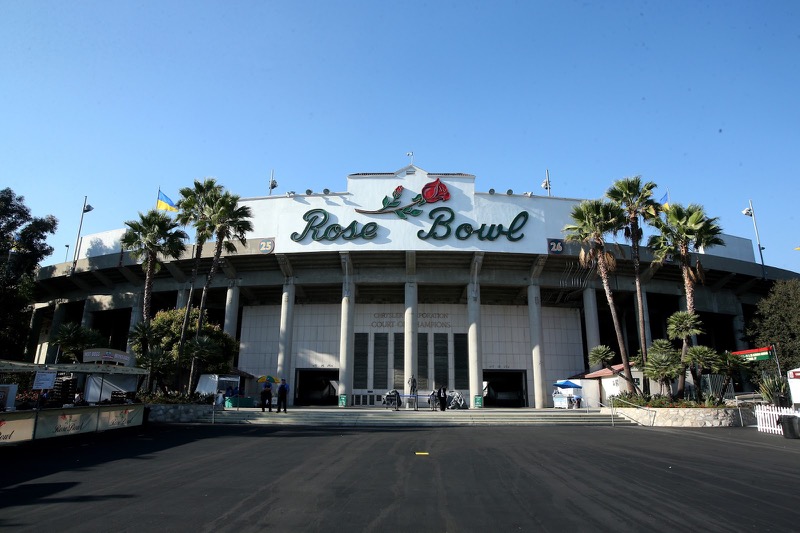
The Rose Bowl stadium is a National Historic Landmark and a California Historic Civil Engineering Landmark designed by Myron Hunt in 1922. Hunt, a member of the Tournament of Roses, dreamed of building a stadium in the center of the Arroyo Seco that at the time was used as Pasadena's first dumpsite. Original outdoor sports in Pasadena were field day competitions dating back to 1890 in nearby Tournament Park, bestowing the namesake for the first Tournament of Roses Parade and games. The parade complete with flower adorned horses and buggies was traditionally held the morning before the games commenced. The annual day of field events once held chariot races during the period 1904 to 1915! The day-long event was championed by The Pasadena Valley Hunt Club founded in 1888, an exclusive private club for outdoors enthusiasts that still remains the functioning organization behind the annual Tournament of Roses Parade and football games.
Historic Games: The first Rose Bowl game dedicated the new stadium in 1923 when USC defeated Penn State 14-2. The Rose Bowl was the site of the 1932 and 1984 Summer Olympics, the 1994 FIFA World Cup Final, the 1999 FIFA Women’s World Cup Final and five different Super Bowls. The Rose Bowl was also one of four host stadiums for the NCAA national championship game between 1999 and 2014. The last Super Bowl in the Rose Bowl was when the Dallas Cowboys beat the Buffalo Bills 52-17 in Super Bowl XXVII on Jan. 31, 1993. Attendance for that game was 101,000. -excerpt
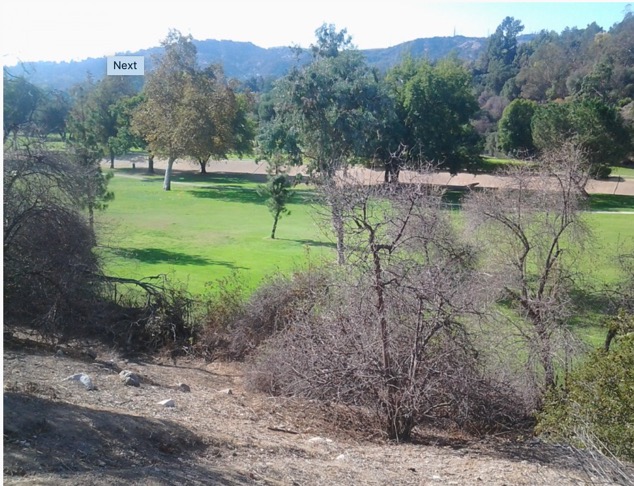
Outdoor activities have been an integral part of Pasadena for over 130 years. While visiting the Rose Bowl Stadium it is easy to see why the central arroyo basin has been and still is an attractive space for those who enjoy outdoor recreation. The forethought of those who played a role in the early design of outdoor space for games allowed the arroyo streambed to continue undisrupted. The concrete channel as it appears today still directly dissects the complete length of the 3.1 mile Rose Bowl Loop that hosts Brookside Golfcourse. The channel serves as a waterway during the rainy season as well as a wildlife corridor allowing animals the essential space they need to roam. Both wildlife and those seeking outdoor activities cohabitate in a collision of unique wildland and organized recreational space. Do you recall other venues that share similarities?
The Rose Bowl stadium is a National Historic Landmark and a California Historic Civil Engineering Landmark designed by Myron Hunt in 1922. Hunt, a member of the Tournament of Roses, dreamed of building a stadium in the center of the Arroyo Seco that at the time was used as Pasadena's first dumpsite. Original outdoor sports in Pasadena were field day competitions dating back to 1890 in nearby Tournament Park, bestowing the namesake for the first Tournament of Roses Parade and games. The parade complete with flower adorned horses and buggies was traditionally held the morning before the games commenced. The annual day of field events once held chariot races during the period 1904 to 1915! The day-long event was championed by The Pasadena Valley Hunt Club founded in 1888, an exclusive private club for outdoors enthusiasts that still remains the functioning organization behind the annual Tournament of Roses Parade and football games.
Historic Games: The first Rose Bowl game dedicated the new stadium in 1923 when USC defeated Penn State 14-2. The Rose Bowl was the site of the 1932 and 1984 Summer Olympics, the 1994 FIFA World Cup Final, the 1999 FIFA Women’s World Cup Final and five different Super Bowls. The Rose Bowl was also one of four host stadiums for the NCAA national championship game between 1999 and 2014. The last Super Bowl in the Rose Bowl was when the Dallas Cowboys beat the Buffalo Bills 52-17 in Super Bowl XXVII on Jan. 31, 1993. Attendance for that game was 101,000. -excerpt
Outdoor activities have been an integral part of Pasadena for over 130 years. While visiting the Rose Bowl Stadium it is easy to see why the central arroyo basin has been and still is an attractive space for those who enjoy outdoor recreation. The forethought of those who played a role in the early design of outdoor space for games allowed the arroyo streambed to continue undisrupted. The concrete channel as it appears today still directly dissects the complete length of the 3.1 mile Rose Bowl Loop that hosts Brookside Golfcourse. The channel serves as a waterway during the rainy season as well as a wildlife corridor allowing animals the essential space they need to roam. Both wildlife and those seeking outdoor activities cohabitate in a collision of unique wildland and organized recreational space. Do you recall other venues that share similarities?